Milwaukee Women’s Correctional Center inmate info shares clear and verified facts about a Wisconsin DOC center for adult female inmates. It explains the role of the facility, the type of custody offered, and the services available under state correctional rules. This information supports families, legal researchers, and the public searching for reliable details. Content reflects public Wisconsin DOC records. The focus stays on accuracy, clarity, and public trust.
Milwaukee Women’s Correctional Center is a minimum-security DOC facility located in Milwaukee, Wisconsin. The center opened in 2003 and operates within the Wisconsin Women’s Correctional System, housing adult female inmates in a structured environment that emphasizes safety and accountability. Daily operations follow Wisconsin DOC standards and established correctional policies. Using the Wisconsin Inmate Locator, this page provides easy access to facility information, inmate services, and program details, presenting them in plain language that aligns with search intent and Google AI systems such as RankBrain and Helpful Content signals.
What is Milwaukee Women’s Correctional Center
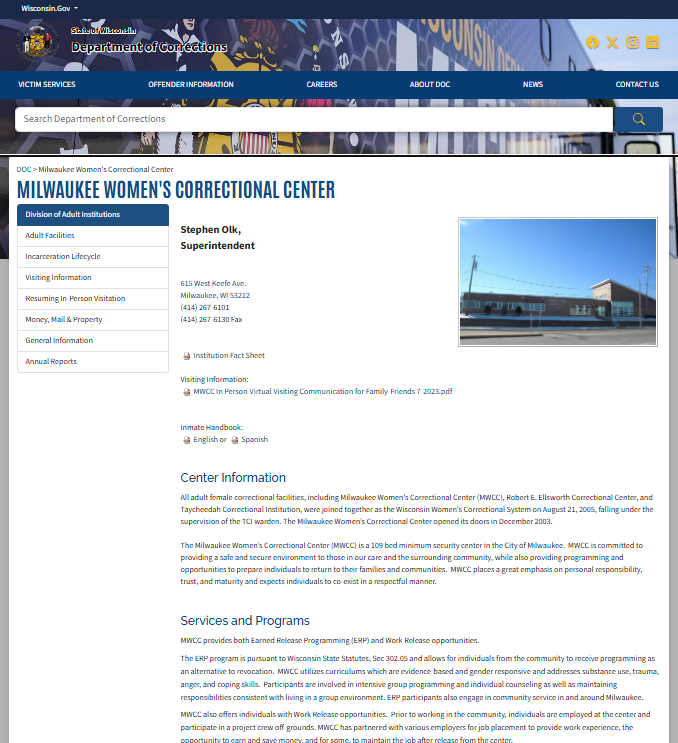
Milwaukee Women’s Correctional Center (MWCC) is a minimum security DOC center in Milwaukee that serves adult female inmates in Wisconsin. The facility focuses on safety, accountability, and preparation https://doc.wi.gov/Pages/OffenderInformation/AdultInstitutions/MilwaukeeWomensCorrectionalCenter.aspx for a stable return to the community. Milwaukee Women’s Correctional Center opened in December 2003 and operates as a 109-bed minimum security women’s prison in Wisconsin. It sits within the City of Milwaukee and functions under the Wisconsin Department of Corrections. MWCC was created to support adult women through structured supervision, clear expectations, and practical programming that supports long-term stability.
The center plays a defined role within the Wisconsin women’s correctional system. It houses women who qualify for minimum security placement and who can succeed in a setting built on shared responsibility. Staff maintain close supervision and clear routines so daily operations stay consistent and predictable. This structure helps residents build self-discipline and accountability.
Mission, Values, and Facility Focus
MWCC places strong weight on personal responsibility, trust, and maturity. These values guide daily expectations, staff interaction, and program participation. Residents live in a group setting where respectful conduct matters at all times.
Facility features include:
- Minimum security status with structured supervision
- 109-bed capacity for adult women
- Emphasis on preparation for family and community life
- Support for behavior growth and decision-making skills
The DOC center promotes a safe environment for residents, staff, and the surrounding Milwaukee community. Clear rules and consistent routines help female inmates practice accountability. Programs and daily activities reinforce positive habits that support success after release.
Wisconsin Women’s Correctional System Context
The Wisconsin Women’s Correctional System brings all adult women’s correctional facilities under one coordinated structure. This system helps Wisconsin DOC centers manage custody, programming, and reentry services in a consistent way across the state. The system was formed on August 21, 2005, when Wisconsin unified its women’s correctional facilities under a single operational model. This change improved coordination, staffing alignment, and program delivery for female inmates housed in different locations.
How Wisconsin’s Women’s Correctional Facilities Work Together
Under this structure, three primary women’s correctional facilities in Wisconsin operate as one system:
- Milwaukee Women’s Correctional Center (MWCC)
- Taycheedah Correctional Institution (TCI)
- Robert E. Ellsworth Correctional Center
All three DOC centers fall under the administrative oversight of the Taycheedah Correctional Institution warden. This shared leadership supports consistent policies, staff training, and program standards across locations. As a result, women transferred between facilities experience similar rules, expectations, and service availability. MWCC plays a unique role in this system. It focuses on minimum-security placement, earned release programming, and work release opportunities for female inmates preparing for community reintegration. TCI serves as the system’s largest institution, managing higher custody levels. Robert E. Ellsworth Correctional Center supports transitional programming and structured supervision.
MWCC Administration and Leadership
The Milwaukee Women’s Correctional Center operates under experienced Wisconsin DOC leadership focused on safety, structure, and rehabilitation. Day-to-day direction comes from the MWCC superintendent, who oversees staff, programs, and facility operations. Stephen Olk serves as Superintendent of Milwaukee Women’s Correctional Center, leading the institution under Wisconsin Department of Corrections authority. In this role, he manages administrative oversight, staff supervision, and policy implementation across the DOC center. His leadership supports a secure environment for female inmates and staff across the facility.
At MWCC, leadership sets clear expectations for safety and accountability. The administration works closely with custody teams, program coordinators, and treatment staff to maintain consistent operations. At the same time, leadership promotes evidence-based programming that supports rehabilitation and responsible behavior.
Responsibilities under Wisconsin DOC leadership include:
- Maintaining facility security and operational standards
- Supporting earned release and work release programs
- Overseeing staff training and compliance
- Encouraging structured routines for female inmates
Through steady oversight, MWCC leadership balances security needs with programming goals. This approach helps the center remain focused on preparation for community reentry within Wisconsin’s correctional system.
Facility Security Level and Living Environment
Milwaukee Women’s Correctional Center operates as a minimum security women’s prison that focuses on structure, accountability, and preparation for community return. The living environment supports female inmates in Wisconsin by balancing safety with daily responsibility and respectful interaction. At a minimum security level, the center houses adult women assessed as lower risk. Movement within the facility follows clear schedules, and supervision emphasizes routine rather than constant confinement. This setting allows residents to take part in programs, work assignments, and group activities under staff oversight.
What Minimum Security Means at MWCC
Minimum security at this DOC center reflects trust paired with clear rules. Residents follow set daily expectations that mirror community life. These expectations include:
- Reporting on time for work or programs
- Maintaining personal and shared living spaces
- Following the conduct standards set by Wisconsin DOC
The structure helps reinforce accountability and steady habits.
Daily Living and Shared Responsibility
Daily life at MWCC centers on group living. Residents share housing units and common areas, which builds responsibility and cooperation. Staff encourage problem-solving, respectful speech, and maturity during daily interactions. This model supports smoother day-to-day operations and personal growth.
Respectful Co-Existence Model
The living environment promotes mutual respect between residents and staff. Clear behavior standards, conduct, and conflicts are addressed through communication and staff support. This approach supports safety, stability, and readiness for release back into families and communities.
Inmate Programs and Services at MWCC
The Milwaukee Women’s Correctional Center (MWCC) offers a wide range of programs and services designed to support female inmates in Wisconsin. These initiatives focus on rehabilitation, personal growth, and preparing individuals for successful reentry into their communities.
Gender-Responsive Programming
MWCC provides gender-responsive programming that addresses the unique needs of women in a correctional environment. This approach considers factors such as trauma, substance use, and mental health, offering strategies that help inmates manage challenges effectively. Programs are structured to build resilience, emotional regulation, and self-awareness while encouraging positive decision-making.
Trauma-Informed Services
Trauma-informed services form a key part of the MWCC experience. Instructors and counselors work with inmates to address past experiences of abuse or emotional distress. These services include individual counseling, group therapy sessions, and workshops that teach coping mechanisms and stress management techniques. By fostering a supportive environment, MWCC helps women process trauma in safe, constructive ways.
Counseling and Group Programming
Counseling and group programming provide ongoing opportunities for personal development. Participants engage in structured sessions focusing on anger management, substance use recovery, and conflict resolution. Group activities encourage collaboration, accountability, and peer support. In addition, professional staff monitor progress and provide guidance, ensuring that inmates receive individualized attention while benefiting from group dynamics.
Life Skills Development
MWCC also emphasizes life skills development, which prepares inmates for daily responsibilities after release. Programs cover financial literacy, communication, parenting support, and workplace readiness. Inmates can participate in educational workshops, vocational training, and job readiness programs, which often include hands-on experiences in real-world tasks. These efforts are supported by partnerships with local organizations and employment programs, giving inmates practical skills and confidence for community reintegration.
Earned Release Program (ERP) at MWCC
The Earned Release Program (ERP) at Milwaukee Women’s Correctional Center (MWCC) allows eligible inmates to participate in community-based programs as an alternative to revocation. It is designed to support female inmates in Wisconsin in addressing personal challenges while preparing for a successful transition back into society.
The ERP at MWCC operates under Wisconsin Statute 302.05, providing a structured program that balances accountability with rehabilitation. Participants are selected based on eligibility and behavioral criteria, ensuring that the program targets those ready to engage in meaningful personal growth. The program focuses on substance use treatment, trauma recovery, anger management, and coping skills, giving female inmates practical tools to manage challenges both inside and outside the correctional environment.
Program Structure and Participation:
- Intensive Group Programming: Participants engage in regular group sessions to discuss coping strategies, behavioral improvement, and accountability.
- Individual Counseling: Each inmate receives tailored counseling to address personal history, trauma, and behavioral patterns.
- Community Service: Inmates complete service projects in Milwaukee, contributing hundreds of hours annually to local organizations and government initiatives.
- Responsibility within the Facility: Participants maintain daily responsibilities consistent with living in a structured group environment, reinforcing maturity and trust-building.
The ERP also emphasizes gender-responsive programming, recognizing the unique needs of female inmates. Research has shown that women respond better to programs addressing relational trauma, emotional regulation, and life skills, making the MWCC ERP highly effective. By participating, inmates gain experience in problem-solving, decision-making, and community engagement, which improves their readiness for eventual reintegration.
Work Release Opportunities for Female Inmates
Milwaukee Women’s Correctional Center provides structured work release opportunities that allow female inmates to gain real-world job experience while still in a secure environment. These programs support skill development, financial responsibility, and smoother transitions back into the community. Work release programs at MWCC focus on balancing accountability with opportunity. Inmates begin with on-site employment at the center, which helps them build work habits, follow schedules, and take on responsibilities in a supervised setting. Once they demonstrate readiness, participants can join off-ground project crews, completing work assignments in partnership with local organizations. This allows women to contribute to meaningful projects while learning workplace etiquette and professional skills.
Employment Partnerships and Career Development
MWCC collaborates with local employers to provide female inmates with temporary or ongoing work placements.
These partnerships offer several benefits:
- Real work experience that enhances resumes
- Opportunities to earn and save money for future needs
- Skills applicable to post-release employment, including teamwork, punctuality, and task management
Women in the program receive responsibilities, workplace safety, and professional conduct. Staff monitor progress closely, providing feedback and support to help maintain success. For many participants, this experience creates a bridge to continued employment after leaving the center.
Financial and Long-Term Benefits
Work release also emphasizes financial independence. Inmates can:
- Earn wages for both personal savings and family support
- Learn budgeting skills in a controlled environment
- Maintain connections with employers who may offer post-release positions
These opportunities are particularly important for female inmates seeking stability and continuity after release. Studies show that structured work programs in correctional centers reduce recidivism by giving participants a sense of purpose, responsibility, and community contribution.
Additional Supportive Services and Opportunities
MWCC offers a variety of supportive programs and services to help female inmates develop skills, maintain connections, and prepare for life both inside and outside the facility. These opportunities focus on personal growth, practical training, and community engagement.
DWD Job Center and Employment Support
MWCC provides inmate services that address both immediate needs and long-term goals. The DWD Job Center on-site connects inmates with job training and employment resources, giving women the tools to pursue stable work after release. Parenting support programs also offer guidance for maintaining strong family relationships, helping mothers stay engaged with their children even while in custody.
Trauma Survivor Support and Religious Services
Trauma survivor support is a cornerstone of MWCC’s care, recognizing the unique challenges female inmates may face. Counseling and group sessions teach coping strategies and promote emotional healing. The facility also offers religious services and study groups, allowing inmates to practice their faith and build a sense of community within the correctional environment.
Skill Development and Certifications
MWCC provides skill development programs that offer practical certifications and training. Inmates can earn ServSafe certification, preparing them for careers in food handling and service. Driver’s license assistance is also available to eligible inmates, helping them regain mobility and independence upon reentry.
Education and Leisure Activities
Educational and leisure opportunities are part of MWCC’s holistic support. These include reading programs, hobby-based workshops, and structured recreational activities. Such programs encourage personal growth, creativity, and positive use of time while incarcerated.
Supporting Rehabilitation and Community Engagement
By offering these comprehensive DOC center programs, MWCC promotes rehabilitation, encourages responsibility, and strengthens community engagement. These services ensure that female inmates have access to meaningful activities and resources, helping them return successfully to their families and society.
Community Enhancement and Service Projects
The Milwaukee Women’s Correctional Center actively participates in community service programs to benefit both its residents and the surrounding community. These projects allow female inmates to engage in meaningful work while supporting rehabilitation and reentry efforts. MWCC collaborates with local government agencies and non-profit organizations to plan and execute community initiatives. Each year, inmates contribute thousands of hours to projects such as neighborhood cleanups, food drives, and public facility maintenance. These opportunities encourage responsibility, teamwork, and civic engagement, reinforcing skills that are valuable after release.
Community service programs include:
- Neighborhood improvement projects: Inmates assist in beautifying public spaces and maintaining parks.
- Food and clothing drives: Collaborations with local charities help provide essentials to families in need.
- Support for local events: Residents participate in setup and support roles for city and nonprofit events.
By integrating these programs into daily routines, MWCC emphasizes rehabilitation through responsibility. Engaging in community projects strengthens social skills, fosters accountability, and offers a sense of accomplishment for residents. In addition, these activities build positive connections between the correctional center and Milwaukee residents, promoting trust and understanding.
Visiting Information at Milwaukee Women’s Correctional Center
Visiting the Milwaukee Women’s Correctional Center (MWCC) allows family and friends to maintain meaningful connections with inmates. MWCC provides both in-person and virtual visitation options to accommodate schedules and safety requirements. Maintaining contact is important for the well-being of female inmates and supports positive reentry outcomes. MWCC visitation procedures are designed to ensure a safe, organized, and respectful environment for everyone involved.
In-Person Visitation
MWCC offers structured in-person visiting on scheduled days. Visitors must be on the inmate’s approved list and arrive with proper identification. The facility maintains a minimum security environment, which requires cooperation with staff and adherence to all safety rules.
Key points for in-person visiting:
- Approval Required: All visitors must be pre-approved through MWCC’s visitation process.
- Scheduling Visits: Visits are scheduled in advance; walk-ins are generally not accepted.
- Visitor Identification: A government-issued ID is required at check-in.
- Behavior Expectations: Visitors must follow all rules, including dress code and conduct requirements, to maintain safety.
Virtual Visitation
MWCC also provides virtual visitation options, allowing friends and family to connect remotely. Virtual visits help accommodate those who cannot travel to Milwaukee or have limited availability.
- Virtual visits are scheduled in advance using MWCC’s online system.
- Participants must follow the same behavioral standards as in-person visits.
- Each session has a defined time limit, and technical requirements may include a stable internet connection, a device with a camera, and approved software.
Family and Friends Guidelines
To ensure visits are smooth and meaningful, MWCC provides clear guidelines for family and friends:
- Only approved visitors may attend.
- An adult guardian must accompany minors.
- Personal items, such as bags or electronics, are restricted and may not be brought into the facility.
- Visitors are encouraged to arrive early and follow staff directions at all times.
MWCC emphasizes respect, safety, and consistency during all visiting sessions. These measures protect both the female inmates and the visiting public while supporting positive interpersonal connections.
Inmate Handbook and Institutional Rules
The Milwaukee Women’s Correctional Center provides an inmate handbook to every individual in custody, available in both English and Spanish. This handbook outlines all DOC center rules and expectations, helping inmates and their families stay informed about daily life at MWCC. The inmate handbook serves as a comprehensive guide to life inside the facility. It details daily schedules, behavioral expectations, safety procedures, and the responsibilities of female inmates. Rules regarding personal property, communication, and participation in programs are clearly described. Families can benefit from reviewing the handbook because it clarifies visitation procedures, allowed items, and how to support an inmate’s compliance with MWCC regulations.
Covered in the Handbook:
- Daily Life and Conduct: Rules for respecting staff, co-inmates, and facility property.
- Visitation Policies: Instructions for in-person and virtual visits, including approved times and items allowed.
- Programs and Opportunities: Overview of educational programs, work release, ERP participation, and community service involvement.
- Health and Safety Procedures: Guidelines for medical care, mental health support, and emergency protocols.
- Communication Rules: Phone, mail, and electronic messaging policies for inmates.
MWCC emphasizes that familiarity with the inmate handbook supports a safe, organized environment. Compliance with DOC center rules can also affect participation in programs like Earned Release and Work Release, which are designed to help inmates reintegrate into the community responsibly. By reviewing the handbook, families can provide informed support and understand expectations that influence behavior, privileges, and opportunities for rehabilitation.
(FAQs) About Milwaukee Women’s Correctional Center Inmate
The Milwaukee Women’s Correctional Center (MWCC) houses adult female inmates and provides programs to support rehabilitation and reentry. It also offers resources for families, friends, and the public to understand the facility’s operations.
Is MWCC only for women?
Yes, MWCC is exclusively for adult female inmates and is part of the Wisconsin Women’s Correctional System. The center focuses on safety, personal responsibility, and rehabilitation while offering programs that help women gain life skills, participate in community service, and prepare for reintegration into society. This approach ensures that female inmates can live and work in a respectful, structured environment under the of the DOC center.
What type of inmates are housed here?
MWCC primarily accommodates minimum-security female inmates who can safely live in a group setting. The facility includes women transitioning from other centers, those participating in work release, and participants in the Earned Release Program (ERP). Female inmates at MWCC have access to educational, vocational, and therapeutic services that help them build practical skills and prepare for life outside the facility.
How does earned release work?
The Earned Release Program (ERP) allows eligible female inmates to participate in gender-responsive and evidence-based programs as an alternative to standard revocation. Participants engage in group sessions, individual counseling, and community service, addressing challenges like trauma, substance use, and anger management. By completing ERP successfully, women demonstrate positive behavior changes that support earlier reintegration into the community while meeting DOC center requirements.
Are work release jobs guaranteed?
Work release positions at MWCC are not guaranteed, but provide structured opportunities for female inmates to gain employment experience. Women first work at the facility or in off-site project crews, and the center partners with local employers to provide additional work placements. These programs help inmates earn and save money, develop job skills, and improve their chances of maintaining employment after release.
How does MWCC support reentry?
MWCC supports reentry through programs designed to prepare female inmates for life after release. Services include parenting support, trauma counseling, educational and vocational opportunities, and assistance with driver’s licenses or certifications. The facility also encourages participation in community service projects, which build social connections and confidence while reducing the risk of recidivism, helping women successfully reintegrate into society.