Inmate visitation in Wisconsin allows approved friends and family to maintain regular contact with individuals housed in state correctional facilities. Visits support emotional connections and have been shown to reduce recidivism while promoting positive behavior during incarceration. The Wisconsin Department of Corrections (DOC) provides clear procedures for visitors, including rules on approved visitor lists, identification requirements, and acceptable behavior inside visiting areas. Understanding these requirements helps visitors plan effectively and ensures visits proceed without interruptions.
Wisconsin DOC offers both in-person and enhanced video visitation options, giving families flexible ways to connect. A quick Wisconsin Prison Search can help visitors confirm inmate locations and facility details before planning their visit. Visitors must comply with facility-specific guidelines regarding clothing, prohibited items, and scheduling, while maintaining a respectful and safe environment. Each facility enforces limits on visitor numbers and age-specific rules for minors. By following DOC policies, visitors help create a secure atmosphere that benefits inmates, staff, and all other visitors. Preparation, awareness of visiting hours, and understanding the approval process are essential for a meaningful and stress-free visit.
Wisconsin DOC Visiting Philosophy & Legal Basis
Wisconsin DOC visitation exists to keep family and friends connected with inmates. Approved visitors play a vital role in supporting rehabilitation and successful reintegration into society. The Wisconsin Department of Corrections recognizes that strong family ties significantly improve an inmate’s behavior, participation in programs, and chances of a smooth transition after release. Research consistently shows that regular communication with loved ones reduces recidivism and supports mental well-being. Because of this, the DOC encourages visits from approved family members and friends while maintaining a secure environment.
Wisconsin DOC Visitation Purpose
The purpose of Wisconsin DOC visitation is to create a safe and structured setting where inmates can maintain meaningful connections. Visits are designed to:
- Strengthen family relationships and social support
- Encourage positive behavior within facilities
- Promote participation in educational and treatment programs
- Provide emotional support for both inmates and visitors
By focusing on family engagement, the DOC helps inmates develop accountability and responsibility, which are critical for long-term success outside the correctional system.
Legal Basis for Visiting Rules
Wisconsin law strictly regulates visitation to prevent contraband and maintain safety. Wisconsin Statutes. 302.095(2) prohibits delivering unauthorized items to inmates, including drugs, weapons, or other prohibited articles. Violating this statute is classified as a Class I felony, carrying penalties of up to 3.5 years in prison, a fine of up to $10,000, or both. Visitors must understand that compliance with these rules protects them and the institution. Additionally, the DOC enforces a zero-tolerance policy for drugs and other illegal items. Staff regularly monitor visiting areas and inspect belongings to ensure safety. Visitors are expected to follow all procedures, including adhering to personal property restrictions, dress codes, and behavior standards.
Administrative Code Chapter 309: Visiting Framework
Wisconsin Administrative Code Ch. 309 sets the framework for visitation, including:
- Approved Visitor Lists: Inmates maintain a list of individuals allowed to visit, which is reviewed and approved by facility staff.
- Visitation Limits: Facilities set limits on the number of visitors and children permitted per visit.
- Restrictions & Special Circumstances: No-contact visits or disciplinary restrictions may be applied when necessary.
- Behavior Expectations: Visitors and inmates must comply with conduct rules to maintain a safe and respectful environment.
These rules ensure consistency across all state correctional facilities while allowing for flexibility based on individual inmate circumstances.
How to Get Approved to Visit an Inmate
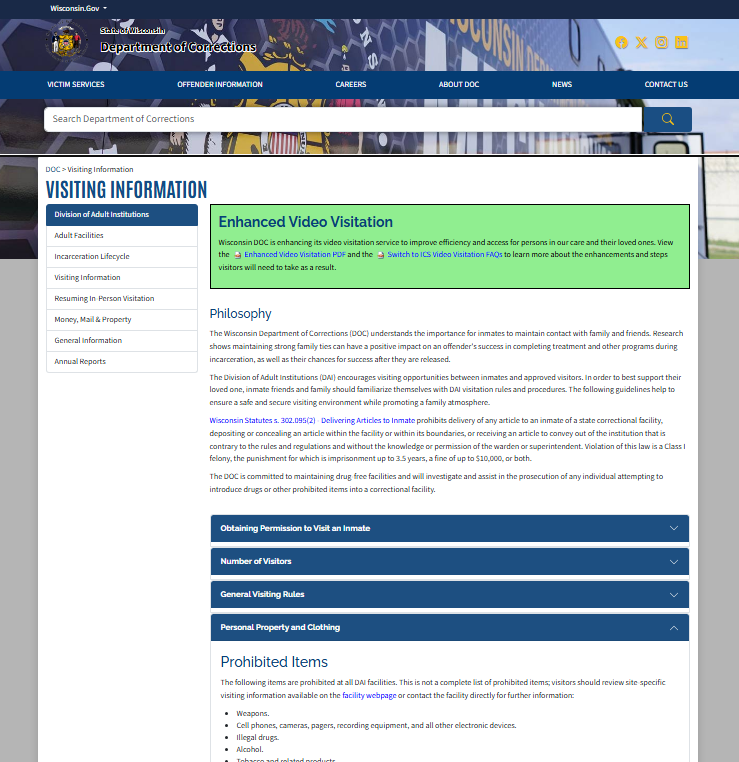
Getting approval to visit an inmate in https://doc.wi.gov/Pages/OffenderInformation/AdultInstitutions/VisitingInformation.aspx Wisconsin requires completing the proper forms and meeting eligibility requirements. Visitors must be listed on the inmate’s approved visitor list and follow all rules set by the Wisconsin Department of Corrections (DOC).
Visitor List & Required Forms
To visit an inmate, individuals must first be added to the approved visitor list maintained by the inmate’s facility. The main form used for this process is the DOC‑21AA Visitor Questionnaire. This form collects essential information about the visitor, including full legal name, date of birth, contact information, and relationship to the inmate. Inmates are responsible for submitting visitor requests to the facility, which then reviews the forms and updates the visitor list. Visitors can usually send the completed DOC‑21AA form by mail, email, or directly to the facility’s visitation office. Processing times vary by facility, but most approvals take 1 to 3 weeks, so submitting forms early is recommended.
For adult visitors, the process is straightforward: they must complete the questionnaire fully and provide accurate identification when visiting. Minor visitors require guardian consent, and a parent or legal guardian may need to sign the DOC‑21AA on the child’s behalf. This ensures that all visits comply with Wisconsin laws and the DOC 309.08 administrative code.
Key Points:
- Submit the DOC‑21AA Visitor Questionnaire completely.
- Visitors must provide accurate personal information and proof of identity.
- Adults can apply independently; minors require a guardian signature.
- Allow 1–3 weeks for approval processing.
- Keep a copy of the approval confirmation for reference.
By following these steps, visitors help maintain a secure and organized visiting system while supporting the inmate’s connection with family and friends.
Visitor Eligibility Criteria
Once a visitor is added to the list, the facility reviews their eligibility. According to DOC 309.08, approval depends on factors such as criminal history, prior infractions, and potential safety risks. Individuals with recent incarceration or a record of facility rule violations may be temporarily restricted or denied.
Other considerations include:
- Relationship to the inmate: Spouses, parents, siblings, and close friends are prioritized.
- Safety and security concerns: The facility evaluates whether the visitor poses a threat to the inmate or others.
- Compliance with facility rules: Visitors must agree to follow all visiting policies, including dress code, behavior standards, and prohibited items rules.
If a visitor is denied, the facility usually provides a written explanation. Visitors may request a review or appeal the decision by submitting a formal letter to the warden or superintendent. This appeal process allows individuals to clarify misunderstandings, provide additional information, or demonstrate compliance with DOC requirements.
Visitor Limits & Lists
Wisconsin state prisons allow each inmate to maintain a visitor list of up to 12 adult visitors. Exceptions exist for additional family members in certain circumstances, and special rules apply for intake or admission and evaluation (A&E) periods. The visitor list serves as an official record of approved individuals permitted to visit an inmate. Adult visitors are generally capped at 12 per inmate, ensuring a manageable and secure environment. This limit includes parents, siblings, close friends, and other adult family members. In cases where an inmate has a large family, the prison may allow additional family members under special approval, but these are considered on a case-by-case basis.
Special Rules for Intake and A&E
During intake or admission and evaluation (A&E) periods, inmates are allowed up to four adult family visitors. This limitation helps staff manage security while providing initial support for new inmates. Visitors should check with the facility in advance to confirm the schedule, as visiting hours may vary. Children can accompany adults according to facility policy, and their presence does not count toward the adult visitor limit.
Aging Out and Visitor Updates
Adult visitors who reach a certain age or change status may be required to update their information. Facilities regularly review visitor lists to ensure all names remain current. Inmates can request updates, such as adding or removing visitors, but approval is subject to DOC rules and security checks.
In‑Person Visiting Rules & Procedures
Visiting an inmate in Wisconsin requires careful attention to the rules, schedules, and security measures. Visitors must follow the DOC policies to ensure a safe and positive experience. In-person visits are structured to balance security with maintaining family connections. Each facility sets specific hours, procedures, and expectations, which visitors should respect to avoid delays or denied entry.
Scheduling & Arrival
Wisconsin DOC facilities post visiting hours on their official webpages. Visits generally occur on weekends and select weekdays, but schedules vary by institution. Visitors should plan and arrive 15–30 minutes early to allow for security checks and check-in procedures.
Requirements for arrival include:
- A valid, government-issued photo ID for all adult visitors.
- Visitor names must be on the inmate’s approved visitor list.
- Children must be accompanied by a parent or guardian, with proper documentation if required.
Scheduling can often be done online or by phone at select facilities, especially for video or special visits. Late arrivals may have their visit shortened or canceled. Keeping a copy of the inmate’s assigned ID number can simplify check-in and prevent confusion.
Visiting Areas & Behavior Standards
Wisconsin DOC encourages visits that maintain a family-friendly environment. Physical contact is generally limited to brief hugs or handshakes at the start and end of the visit. Excessive displays of affection, roughhousing, or disruptive behavior are prohibited.
Visitor behavior expectations include:
- Remaining calm and polite to staff and inmates.
- Following all posted signs and instructions within the visiting area.
- Avoiding any items or gestures that could cause a security concern.
Alcohol or drug use before or during a visit is strictly forbidden. Intoxicated visitors will be denied entry and may face further legal consequences. Children should remain under parental supervision at all times.
Metal Detectors & Security Checks
All visitors pass through metal detectors and may be subject to a search. Visitors are usually given three attempts to clear the detector before staff consider denying entry.
Special accommodations are available for visitors with:
- Medical devices such as pacemakers or orthopedic implants.
- Wheelchair users or mobility limitations, with staff guidance for safe entry.
Staff may inspect bags, coats, or other personal items. Visitors should keep their belongings to a minimum to speed up the process. Security checks maintain the safety of inmates, staff, and visitors, so cooperation is critical.
Personal Property & Clothing Rules
Visitors must adhere to strict rules about what they can bring and wear. Some items are completely prohibited, while others are allowed with limits.
Prohibited items include:
- Phones, cameras, tablets, and electronic devices.
- Weapons or sharp objects.
- Tobacco, alcohol, or illegal drugs.
- Large purses, strollers, or animals (except service animals).
- Food or beverages (exceptions exist at some facilities).
Allowed items include:
- Money up to $25 per visitor.
- Small personal items like a comb, brush, or baby necessities.
- Clear diaper wipes, up to two baby bottles, or one pacifier per child.
- Coats, gloves, and headwear that do not conceal identity.
Visitor clothing rules create a safe and respectful environment:
- Footwear must be worn at all times.
- Shorts must reach fingertip length; skirts and dresses must reach fingertip length plus three inches.
- Strapless, tube, or halter-style tops and exposed midriff or back are prohibited.
- Spandex or Lycra clothing may only be worn under garments of appropriate length.
- Clothing with gang-related insignia, obscene imagery, or items likely to draw undue attention is not allowed.
Visitors should dress conservatively, keeping these rules in mind to avoid delays or denied access. Planning clothing and personal items ahead ensures a smooth check-in and a successful visit.
Video & Remote Visitation
Video visitation in Wisconsin allows approved visitors to connect with inmates without traveling to the facility. This service provides a flexible and secure way for friends and family to maintain regular contact. The Wisconsin Department of Corrections offers enhanced video visitation through the ICSolutions platform. This system supports both personal computers and mobile devices, giving visitors the option to schedule sessions from home or on the go. Video visits follow the same rules as in-person visits, including approved visitor lists and scheduled times, ensuring safety while promoting regular communication.
How to Register and Schedule Video Visits
Visitors must first create an account with ICSolutions. The registration process requires providing full legal name, date of birth, contact information, and a government-issued photo ID. Once registered, the system verifies eligibility based on the inmate’s approved visitor list.
Scheduling a video visit is straightforward:
- Log in to the ICSolutions account.
- Select the inmate and the preferred date and time from available slots.
- Confirm the appointment and review any facility-specific rules.
Video visits are limited to the time slots provided by the facility, usually ranging from 20 to 30 minutes per session. Visitors receive email notifications of their confirmed visits and reminders before the scheduled time.
Costs and Device Requirements
Video visits have a modest fee, which varies by facility and session length. Payment is processed securely through the ICSolutions portal. Visitors can use laptops, tablets, or smartphones with a stable internet connection, a working camera, and audio capabilities. For optimal performance, browsers like Chrome or Firefox are recommended, and the device should support high-speed internet to avoid disruptions.
Scheduling Windows and Rules
Each facility sets specific scheduling windows, often allowing bookings one to two weeks in advance. The DOC enforces the same behavior standards as in-person visits, including no disruptive behavior and adherence to dress code rules, even during video sessions. Visitors are encouraged to log in a few minutes early to ensure proper setup and minimize connection issues.
Special Situations & Restrictions
In certain situations, inmates may face limits on visitation to protect safety and security. Families and friends play a crucial role in supporting inmates, but it is important to understand and respect the rules. Restrictions can include no-contact visits, disciplinary housing, or temporary changes during emergencies. Visitors must follow all Wisconsin DOC guidelines to ensure compliance, helping maintain the opportunity for approved visits and supporting inmates in a safe and structured environment.
No‑Contact Visits
No-contact visits prevent inmates from having direct interaction with specific visitors, usually for safety, security, or disciplinary reasons under DOC 309.11. While in-person contact is restricted, approved visitors may still communicate through video calls, monitored phone calls, or written correspondence. Visitors affected by a no-contact order are notified in advance and may appeal the decision by submitting a formal request to the facility warden. During this period, all rules must be strictly followed, and attempts to bypass restrictions are not allowed, helping ensure a safe environment for inmates, visitors, and staff.
Restrictive Housing and Disciplinary Restrictions
Inmates placed in restrictive housing or under disciplinary actions may have limited visitation privileges due to rule violations, safety concerns, or threats to the facility. Visits during these periods are often supervised or shortened, and special permission may be required for family or legal visitors. These restrictions are temporary and are designed to maintain security while allowing some contact with approved visitors. Staying informed of updates regarding visitation eligibility is crucial for family and friends who want to maintain contact under these conditions.
Special and Extended Visits
Special or extended visits are allowed for significant circumstances, such as family emergencies, medical needs, or important life events. Visitors or inmates must submit a written request to the facility administration explaining the reason and proposed timing of the visit, often with supporting documents like hospital records. Approval is at the discretion of the facility warden and may include additional supervision or modified rules regarding visit duration and allowed items. These visits provide important opportunities for approved visitors to maintain connections during extraordinary situations.
COVID and Emergency Policy Notes
Emergencies such as public health concerns, lockdowns, or severe weather can temporarily alter visitation procedures. During these times, in-person visits may be suspended or limited, and video visitation is often encouraged for approved visitors. Facilities may implement extra safety measures, including symptom screenings, temperature checks, and restricted access to certain areas. These measures protect the health of inmates, staff, and visitors while allowing communication to continue whenever safely possible. Visitors should always check the latest updates from the facility before planning a visit.
Facility‑Specific Variations & Contacts
Visiting procedures in Wisconsin prisons differ depending on the facility. Each institution sets its own hours, security rules, and visitor requirements, so checking the official DOC page is essential for a smooth visit.
Oshkosh Correctional Institution Visiting Details
The Oshkosh Correctional Institution offers a mix of weekday and weekend visiting hours. Visitors must be on the approved list and arrive within designated time windows. Certain housing units may have restricted hours, so reviewing the facility’s page ahead of time helps avoid confusion. Standard security procedures apply, including metal detector checks and rules on allowable personal items. Visitors are encouraged to bring proper identification and follow all clothing and behavior standards to ensure a successful visit.
Green Bay Correctional Institution Visiting Information
At Green Bay Correctional Institution, visiting hours differ slightly from those of other facilities. Some inmates require visits to be scheduled in advance, while others can receive walk-in visitors. The check-in process is clearly outlined on the DOC website and includes the necessary forms and identification. Green Bay also limits the number of visitors per inmate and sets rules regarding children and accompanying adults. Visitors should review these requirements before arriving to avoid delays or denied entry.
Dodge Correctional Institution Visiting Rules
Dodge Correctional Institution maintains its own policies for visiting. Visiting times, approved visitor lists, and security screenings can vary based on the housing unit. Visitors are advised to consult the facility’s official page for details on allowable items, clothing expectations, and video visitation options. The page also provides contact numbers for visitor services staff, who can answer questions and confirm visiting schedules before a planned trip.
Waupun and Other Facilities
Facilities like Waupun Correctional Institution and Columbia Correctional Institution have unique visitation procedures. Their pages outline how to add visitors to an approved list, submit required forms, and follow special visitation rules. Each facility provides phone and email contacts for visitor services staff, who help clarify schedules and answer any questions. Checking these pages ensures visitors comply with local rules, arrive prepared, and avoid prohibited items.
Why Facility Contacts Matter
When planning to visit inmates in Wisconsin, facility contacts play an important role. They provide guidance on scheduling, visitor approvals, and special accommodations. Contacting the visitor services staff ahead of time can help answer questions about hours, visitor limits, and what items are permitted. Following these instructions ensures a smooth visiting experience while complying with Wisconsin DOC regulations.
(FAQ) About Inmate Visitation in Wisconsin
Visiting an inmate in Wisconsin can raise many questions for friends and family. This FAQ section provides clear answers about visiting rules, approved visitors, video visitation, and facility procedures, helping visitors prepare and ensure a smooth experience.
What do I need to bring to see an inmate in Wisconsin?
Visitors must bring a valid government-issued photo ID and only items approved by the facility. Essentials include up to $25 cash, baby supplies like diapers and bottles, medically necessary items, one coat and gloves, and a comb or brush. All items are inspected before entry, and prohibited items such as phones, cameras, purses, alcohol, tobacco, and weapons are not allowed. Following these rules ensures a smooth visit. Checking the facility’s visiting rules before arrival helps prevent issues and delays.
How early can I schedule a visit?
Visits should be scheduled based on the facility’s posted hours, often at least a week in advance. Approved visitors on the inmate’s list are given priority, and online systems like ICSolutions are commonly used for scheduling video visitation. Early planning reduces the chance of being denied due to visitor limits. Each institution may have unique rules for daily visits, so checking the specific facility’s schedule and instructions is recommended.
Can I visit if I have a criminal record?
Having a criminal record does not automatically prevent visitation, but some offenses may affect approval. The facility reviews the DOC‑21AA Visitor Questionnaire and considers the nature of any convictions. Minor offenses are usually acceptable, while serious or related offenses may restrict access. If denied, visitors may appeal or reapply after a waiting period. Compliance with the facility’s approved visitor rules ensures the safety of inmates, staff, and visitors.
Why was my visit denied?
A visit can be denied for several reasons, including being absent from the approved visitor list, failing to present a valid ID, bringing prohibited items, or exhibiting behavior concerns. Staff will usually explain the reason for denial. Minor issues, like missing forms or identification, can often be corrected for a future visit. Following visitor clothing, conduct, and prohibited item guidelines helps prevent denied visits and ensures a safe visiting environment.
Can minors visit?
Minors are allowed to visit if accompanied by a parent or legal guardian and included on the approved visitor list. Facilities permit limited items for children, such as blankets, diapers, and bottles, which must pass inspection. Supervised visits help maintain safety for everyone in the visiting area. Adults must adhere to all visitation rules, including dress code and prohibited item regulations, while caring for minors. Planning makes visits easier and more enjoyable.